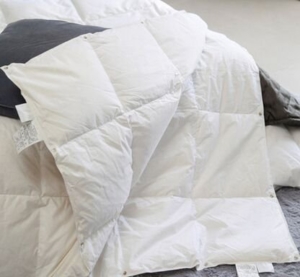
Do you know how to store your duvet?

It’s fall, and it’s time to check if your duvet is stored correctly. Check your duvet for any yellowing, odor, or fluff problems.

How to avoid these problems?

Step 1: Air dry in advance

(Avoid breeding mites, yellowing and peculiar smell)

Before storing down duvets, it is recommended to clean them once conditionally, such as seven stars washing or I*wash, which is a professional washing care for home textiles.

Dry cleaning is absolutely not OK, because dry cleaning will damage down and affect the filling power. Be sure to dry it properly, to make sure the moisture is removed.

The removal of water from the down duvet can better prevent the breeding of mites and bacteria, avoid yellowing caused by moisture after the down duvet is collected, and produce a fishy smell.

Pls note that the duvet can’t be in the air for a long time, it will absorb moisture instead.

Step 2: Use a cloth bag

(Avoid damaging down and affecting down power)


The down of the duvet is spherical structure, the fiber will not withstand long vacuum compression. Many customers in order to save space, choose vacuum compression bag, the damage to down is great. Generally speaking, the proportion of down compression can not be higher than 70%.

When storing the duvet, do you use plastic bags or cloth bags? There are certain rules about this. It’s better use cloth bag to pack duvet. Because plastic bags are not breathable and impermeable to moisture, the compression is also large when packing. So it smells when we leave it a long time.

If a cloth bag is used to pack the down comforter, it can play the role of protecting the quilt, and it can be breathable and permeable. Storage bag can put a bag of activated carbon or desiccant, can play moisture absorption, and can go to the effect of odor, but pay attention not to put mothballs, to avoid the quilt yellowing.

Step 3: Avoid light and stress

(To avoid yellowing and affecting the down power)

After duvet is stored, to be put in dry and avoid to put in the place with strong light directly. Prolonged exposure to light will affect the yellowing of the cover.

In addition, when storing down duvet, do not put in the bottom layer, try to choose to let down duvet on the top, so that it will not affect the down power of duvet.


Can you buy real long staple cotton at a low price?

The best cotton, of course, is long-staple cotton! However, many businesses now claim that their fabric is long staple cotton, you can pay attention to, maybe you buy is not necessarily long staple cotton. Because the price of long staple cotton is much higher than that of 100% cotton. So what is long-staple cotton and how to identify it?

Long-staple cotton gets its name from its long fibers

Only 3% of the world’s cotton is long-staple

Long staple cotton fiber length 33 ~ 39 mm, fineness between 7000 ~ 8500 m/g; The strength is 4 ~ 5 grams/root. So the fabric has the characteristics of soft fiber, fast heating, strong warmth, excellent comfort and so on.


Long-staple cotton has better properties than ordinary cotton

Long staple cotton in the same heat conditions, the growing period is 10 ~ 15 days longer than ordinary cotton.

Therefore, the fabric has many advantages: excellent draping sense, silky smooth and comfortable, high color fastness, long washing does not fade, wear and durability, good wrinkle resistance, not easy to pilling, good permeability and moisture discharge.


Identification method of long staple cotton fabric

Because of the characteristics of long cashmere cotton, it is the first choice of high-grade bed fabric material.
But at present long staple cotton fabric lack of identification method, A few businessmen treat ordinary cotton as long – staple cotton bed product sales, the price is also close to or the same as ordinary cotton, from the simple cost reasoning, is problematic.


Therefore, it is necessary to master some basic identification methods for consumers who like long-staple cotton fabric. To sum up, there are several points:

1. You should go to the brand home textile office to buy, which is relatively reliable;

2. Long staple cotton fabrics generally have silky luster;

3. The feel of long-staple cotton is better than that of ordinary cotton, which can be touched and contrasted;

4. The price of long-staple cotton is much higher than that of ordinary cotton;

5. Long staple cotton is generally used for high count cotton fabrics


Do you know how to air your quilt in summer?

Quilt often sun has many advantages: First, it can avoid the wet state of mites breeding; Second, it can also maintain the quilt well, Third, to increase the service life of the quilt, and ensure physical and mental health. There are a few tricks you need to know to air the quilt.


Not all materials can be sundried!


Cotton quilt can be exposed for a long time, but polyester quilt and tense quilt is not suitable for a long time exposure, burning may occur.

Protein quilts (such as silk, down) can not be exposed for a long time as well, otherwise it will only destroy the grease on the quilt, fiber aging in advance, the loss outweighing the gain.

wholesale duvets

Pay attention to cleaning before drying as well!


Summer quilts can be washed, so we must first clean. Focus on the dust inside, some mites body feces, as well as human dander, to reduce the resulting allergy.


Avoid long time and long frequency!


Summer temperature is high!!  When drying the quilt should pay attention to the time period, 10 am to 2 PM time is better; Bask in time with 2 hours inside had better.

If you insolate the quilt for too long, too much frequency will cause the fibers to become brittle and fall off.


Not only need to sun the A side of the quilt, but also the B side!


Quilt must pay attention to uniform insolation. Most of the time, we only sun the quilt on one side, seemingly you’ve got your quilt in the sun, in fact, moisture and mites ran to the other side, so we must repeatedly sun on both sides.


Cover the quilt with a sheet!


When sun the quilt, it is best to cover a dark old sheet, which mainly plays two roles: 1. Prevent dust from falling on the quilt; 2. Avoid fading of quilt fabric; A lot of quilts are damaged in this way. In particular, some light-sensitive fabrics need to be paid attention to to avoid yellowing.


What’s the difference between a $15 four-piece sets and a $50 four-piece sets ?

My friend told me that she bought one pieces of four bedding sets on the Internet, and it is also good! I asked her what it was made of and she said it was pure cotton! OMG!!! $14 cotton four-piece sets. Is the boss doing charity? So I asked her, do you know what pure cotton is? She looked at me blankly…

Most of the time, we just hear the boss say “This is pure cotton!” Never know what is “pure cotton”! In-depth ask, the boss “very professional” cheat you: content of more than 75% of cotton, is pure cotton! Isn’t that bullshit? The so-called pure, is not mixed with a little impurities, remember !

What is really pure cotton/ 100% cotton?

At this time you should take a careful look: 100% cotton is pure cotton, other are not pure cotton, commonly for polyester cotton or cotton polyester (polyester cotton refers to polyester more and cotton less, on the contrary, is cotton polyester). At any time, with the content of polyester or polyester fabric close to the skin may cause allergic.

Sometimes merchant use polyester- cotton fabric, labeled 100% cotton cheat you. You can judge by touch feel, generally pure cotton scratch a few times, there will be obvious fold marks. Instead polyester- cotton will not have this situation as its fabric is quite broad and good elasticity. That’s why we need to chose a reliable supplier and brand.


What is the real high count high density fabric?


Yarn count density determines the quality of a four-piece set, low grade cotton and general comb cotton can not make high count and high density fabric, because low grade cotton fiber short, strength is not enough, and there are many impurities in low-grade cotton, it can not spin the line of high-count yarn. It is doomed to not weave high density if it is not high-count yarn. Therefore, high-count and high-density cotton are selected, such as long stapled cotton.

High count means how many 840 yards can be spun in 1 pound of cotton. 40 counts means that 40* 840 yards can be spun, which means that more yarn can be spun for the same weight of cotton. According to the current standard, the high count and high density fabric at least 80 yarns, the total number of warp and weft yarns of more than 600, and this kind of fabric can only be used long staple cotton. Remember: if the business claims 40, more than 300 is high density fabric, that’s not ture !

Although all are pure cotton, but high count high-density fabric compared with ordinary cotton, feel more delicate, fabric more soft, better gloss, close skin better performance. Judgment can be through the touch fabric feel, look at the fabric gloss, drape performance (softness) and fabric yarn fineness to observe the contrast.

How to wash pillows of different materials in summer?

Pillows are the most likely to harbor bacteria in the summer. Adults shed about 100 grams of sweat each night when they sleep, and most of this sweat gets inside the pillow and builds nests for dust mites. The dandruff becomes a food source for dust mites, and drying makes dust more likely to produce dust mites.

How exactly do you reduce dust mites? The following two points can be controlled:

  • If the temperature is higher than 35℃ or lower than 0℃ for 24 hours, it will die, and if the humidity is lower than 50% or higher than 85%, it cannot reproduce.
  • Cut off its food source.

To achieve the above two points, it is a little difficult, such as temperature and humidity, long-term maintenance needs equipment to do the support. Therefore, only we develop good habits, in order to put an end to mites wanton attack.

Six Signs your pillow should be cleaned

1. It has been used for three months

2. Your pillow smells

3. Feel your pillow damp

4. The pillow fabric has turned yellow

5. Sleeping with itchy head

6. Visible dust inside the pillow


Polyester/Down alternative pillow


Hand wash with lukewarm water, neutral detergent, machine wash, machine wash had better add a towel to wash together, in order to balance water flow;

Fiber pillow, easy to wash. Best flat air basking, can effectively prevent fiber into a group or uneven phenomenon.


Feather Down pillow


Mix the neutral detergent in the water, put the down pillow in the water, and constantly squeeze the pillow with your hands until it is cleaned (the washing liquid is squeezed clean). In order to avoid some residual watermark, put a little white vinegar in the rinse, rinse it out, squeeze it dry, and put it flat in the air.


Memory pillow, not suitable for washing


Memory pillow is difficult to dry after absorbing water, so use a vacuum cleaner to clean the dust. If you encounter the following circumstances, you can wash it like this:

Odor: Spray with white vinegar to remove odor and let dry in a cool place.

Dirt: Pour a small amount of detergent into the water, dip in water with a clean white cloth, and gently wipe sponge dirt. Wipe excess water off the sponge with a dry towel and leave to dry in a cool place.


Latex pillows


Fill a basin of clean water, so that the latex pillow lay flat, water over the pillow; Use hand extrusion method, replace the water,  repeated several times.

Put the pillow on the platform to filter water, when it no longer dripping, blow dry with an electric fan or dry naturally.

Remember not to sunbathe, which will make it easy to harden, affect the pillow’s life.


Buckwheat pillow


Buckwheat, cassia seed, tea carbon and other natural type pillows can not be washed. Summer humidity is high, it is necessary to take out the fillers every other half month for airing (appropriate exposure to the sun), fiber fillers according to the above method cleaning.


What harm does bed product insolate have?

The sun is very hot in summer, everyone likes the sun, so the quilt, bed sheet, pillow are taken to expose, actually not to say that exposure can effectively kill mites. Mite is not a fool. He hides! So sun exposure is not an effective way to kill mites!

And I’m telling you, it does more harm than good. According to our previous observation, the following problems generally occur in bed exposure:

Fabrics fade


Bedding is not suitable for long insolation, can make fabric fast fade. Originally dark color becomes light, color becomes fuzzy and so on. Because dye in light irradiation, it will absorb light energy, resulting in dye decomposition and fade, especially with gray, powder, blue more sensitive.


Fabric become brittle


In the process of fabric exposure, due to different degrees of cleavage in the sun, the fiber macromolecules are broken, the molecular weight decreases, and the strength decreases. One day, you accidentally pulled the fabric, it may be broken, you do not feel strange, because the fabric aging in advance.


Fabric will shrink


Cotton, silk, wool, Tencel … are of good hygroscopicity, inevitably meet the problem of shrinkage. When the bedding is cleaned, the fiber absorbs enough moisture and begins to expand, but when it is exposed to the sun, the moisture is quickly evaporated, making the fabric shrink abnormally, affecting the use.


Therefore, we should pay attention to, reflect on why our bedding is easy to fade, easy to shrink.  It may be caused by sun exposure.


Do Pillows Damage your body?

Many people say: I don’t sleep with pillows! Do you want pillows or not?

“Sleep without a pillow”. I tried not sleeping with a pillow, but as a result, you know, after not sleeping with a pillow, I woke up feeling dizzy and puffy in the morning. In particular, people who are used to sleeping on their back should pay attention to the fact that they sleep on their back for a long time without sleeping with a pillow, which may be caused by insufficient cerebral blood supply.

According to the human body physiology curve, the spine and hip, back back these three points is not a straight line, if you don’t sleep pillow, will make the normal physiology curve is not normal, maintain this pose for a long time will be oppression in other parts of the body, produce uncomfortable, so the pillow can effectively adjust the flat position, keep your good sleep quality.

Normally COxAL ARRIVES HIND HEAD HEIGHT DIFFERENCE TO HAVE 6 ~ 8CM or SO, ACTUALLY THIS IS PILLOW NORMAL HEIGHT. Of course, because everyone’s physiological curve is more or less different, so we each need a different pillow height, but this height is the consensus.

Do not sleep a pillow for a long time has three major hazards, we must pay attention to!

Spinal deformity


Without pillow for a long time, cervical lordosis curvature is too large, involving the lumbar spine, increasing a certain burden to the lumbar spine, so the natural curve of the spine of the human body changes. Honey, if you don’t sleep on pillows for a long time, go take a picture. If you’re standing or at your desk for a long time, you’ll need a pillow.


Snoring is serious


People who do not sleep with pillows, when sleeping, their buttocks, back spine and the back of the head are not in a straight line, so sleep is easy to lead to increased sleep pressure, sleep uncomfortable, easy to open mouth breathing, snoring symptoms. If you don’t want your partner to snore, invest in a good pillow. Snoring is not due to good sleep. It is medically known as sleep apnea syndrome. This condition is prone to accidents and should be taken seriously!!


Suffering from cervical spondylosis


Director of orthopaedic doctor said: pillow choose height is wrong, will lead to overly bend or stretch of cervical vertebra, can cause cervical instability, of cervical vertebra and lumbar disk form more obvious pressure, resulting in improper sleeping position, cause chronic cervical muscle strain, hyperplasia of small joints, intervertebral disc degeneration, cervical spondylosis and cervical high blood pressure, it’s essential to choose a good pillow!

How to choice Linen Sheets?

What is Linen?

Linen is a textile material derived from cellulose fibers of the flax plant (also known as linseed). Considered one of the world’s oldest fabrics, the production of linen dates back to prehistoric times. Today, linen is used to make a wide range of products, including garments, upholstery, tablecloths, and towels. It is also used to produce sheets and pillowcases, and is considered a more breathable alternative to cotton and polyester.


To produce linen, flax fibers are separated from the plant and spun into fine yarns, which can be woven or knit (most sheets and pillowcases are woven). Linen is commonly harvested by hand, a technique that often results in a highly durable material.

Linen offers a distinctly crisp hand-feel. Some sleepers love the texture of linen, while others find it a bit too coarse and scratchy. Linen is exceptionally breathable, as well, making it well-suited to warmer temperatures.

How to Choose Linen Sheets

As with other bedding products, choosing a linen sheet set requires consideration and research on your part. We recommend comparison shopping with different brands and collections to get an idea about expected prices, available sizes and styles, and other important details. In the next section, we’ll cover the most important factors to take into account when shopping for a new linen set.

What to Consider When Buying Linen Sheets

Our most important considerations for linen sheet shoppers are outlined below. Keep in mind that a high price-point does not always equate high quality. Some luxury bedding brands use misleading jargon to market their products. While many high-end linen sets are a worthwhile investment due to their durability, breathability, and comfort, some are simply overpriced and may not perform well over time.

  • Feel: Linen feels very crisp and smooth at first, but the material will soften over time with subsequent laundry cycles. Some linen bedding feels initially softer due to certain manufacturing techniques, such as garment-washing or stone-washing. Linen blended with other fabrics like cotton or rayon from bamboo also tends to be softer than pure linen.
  • Fit: When browsing linen sheet sets, be sure to check the “pocket depth” measurement of the fitted sheet. This figure refers to how far the elasticated corners will stretch, and should accommodate the thickness of your mattress. For example, a fitted sheet with a 12-inch pocket depth won’t be deep enough for a 13-inch mattress. Also keep in mind that linen may shrink in the wash – though this won’t be an issue if you buy pre-washed linen.
  • Price: High-quality linen sets typically cost $200 or more in any size. For a queen size set, expect to pay between $300 and $600. More affordable linen sets are also available, but they may not meet the same standards for quality and durability. Blended linen usually costs less than pure linen.
  • Weight: The weight of linen sheets is expressed in grams per square meter, or GSM. According to general consensus among sleepers and sleep experts, the ideal GSM for linen sheets falls between 170 and 190. Heavier linen sheets provide more insulation during colder times of the year, but they may feel excessively warm when the temperatures rise. Lighter linen sheets are optimal for warmer weather but may feel too thin in colder climates.
  • Design, Color, and Pattern: Compared to sheet sets made from other fabrics, you may find a more limited color and pattern selection for linen items. Neutral and earth tones, as well as whites and off-whites, are most common. These shades complement most bedroom decors, but if you prefer more vibrant colors and patterns, then you may want to consider another bedding material.
  • Breathability: Breathability is considered one of linen’s biggest strengths. The material is very airy and light, making it ideal for sleep during hotter times of the year. At the same time, most linen sheets and pillowcases offer decent warmth and insulation from the cold.
  • Durability: Linen is quite durable, especially if the fabric comes from hand-harvested fibers. That said, linen tends to deteriorate over time if you wash and dry it in a machine too frequently. Many manufacturers recommend line-drying to preserve the material better. A higher GSM measurement may indicate the linen is more durable.
  • Ease of Care: Most linen sheets and pillowcases can be washed and dried in any household machine, though you should not wash these items too frequently; otherwise they will deteriorate more quickly. Most manufacturers discourage the use of chlorine bleach or fabric softener.

What Are the Pros and Cons of Linen Sheets?

Natural breathability and durability are considered two of linen’s biggest strengths. However, there are also some disadvantages associated with linen, such as above-average pricing and excessive wrinkles. In the table below, we’ll break down linen’s most notable pros and cons.

Pros Cons
  • Linen is a naturally breathable material that wicks away moisture from your body and can help you stay cool during warmer months. It won’t trap heat like polyester and other synthetic fabrics, but heavier linens provide good insulation when the temperature dips.
  • The flax fibers used to create linen yarns are very durable. As a result, linen bedding products typically offer decent lifespans – provided you don’t wash them too often. Linen doesn’t pill like cotton or polyester, either.
  • Linen offers certain health benefits for users. It is naturally hypoallergenic, making it ideal for people with allergies. Linen is also resistant to dirt and won’t generate static.
  • Even for a natural fiber, linen is quite eco-friendly. Flax plants are renewable and their cultivation requires minimal irrigation.
  • Many sleepers enjoy the crisp hand feel of traditional linen, but some find it too coarse and scratchy at first. The material may soften over time, but other bedding materials – such as cotton and Tencel – offer more initial softness.
  • Linen sheets and pillowcases are prone to wrinkling, especially if you choose to line dry them. Fabric softener is generally discouraged, but you can iron them flat if excessive wrinkles occur.
  • Linen sheet sets tend to be fairly expensive compared to items made from other materials. A high-quality linen set will probably cost at least $250, and some exceed the $500 mark.

What Is the Ideal Thread Count for Linen Sheets?

The ideal thread count for linen is between 80 and 120. However, judging the thread count of linen can be a bit tricky. With other materials like cotton or silk, a higher thread count often corresponds to better quality. The opposite is true for linen because the fibers are thicker and more difficult to weave together. If the thread count is too high, the material will be bulky and not particularly breathable. Bottom line: be wary of any manufacturer or seller that touts a “high thread count” for their linen sheet set.

Many manufacturers of linen bedding do not list a thread count at all. Instead, they use grams per square meter, or GSM, to describe the material’s quality. The optimal GSM is 170 to 190, indicating a medium weight of about 0.3 to 0.4 pounds. These sheets and pillowcases will drape comfortably without feeling too heavy or hot. If you don’t see GSM listed on the website of a linen sheet set you’d like to buy, reach out to customer service.

More Frequently Asked Questions About Linen Sheets

How long do linen sheets last?

With proper use and care, a linen sheet set can last years – even decades in some cases. The trick to preserving linen bedding items is to clean them sparingly. Avoid using chlorine bleach and other chemicals during the wash cycle, and consider drying the linen on a line rather than in a machine. Excessive washing can cause linen to develop holes and deteriorate more quickly.

How do I make my linen sheets feel softer?

High-quality linen will become softer over time with repeated wash cycles, but it will still retain its naturally crisp texture. If you prefer softness over crispness for your sheets and pillowcases, you may want to purchase a set made of linen that has been garment-washed or stone-washed during production. These techniques give the fabric a softer hand feel.

How do I wash and care for linen sheets?

Always defer to the care tag on your linen bedding when it comes to washing and drying these items. In most cases, you’ll be able to clean these sheets and pillowcases in any household machine. Machine washing in warm or cold water and tumble drying on low is usually recommended, and you should never use bleach or laundry additives. You should also wash linen bedding separately from other garments and items. Hot-ironing can damage linen, so use a warm iron setting when removing wrinkles. Linen is also very absorbent, so be sure to spot-clean stains and spills as quickly as possible.

Are luxury linen sheets worth the price?

You’ll probably pay at least $200 for a high-quality linen sheet set – and in some cases, the sticker price will be double or even triple this amount. The good news is that linen sheets are exceptionally durable as long as you wash and dry them infrequently. So while linen sheets and pillowcases may be significant up-front investments, you’ll be able to enjoy them for many years.

Organic Sheets

While the term “organic” has become a buzzword in recent years, organic bedding can have several benefits for sleepers. Organic materials tend to be more breathable, and they are typically free from harsh chemicals that could irritate the skin or respiratory system. Organic bedding can also be more durable than products made using non-organic materials, blends, or synthetics, which can make them a good long-term investment.

Additionally, producing organic sheets may be better for the environment and workers. Many organic bedding manufacturers focus on using socially and environmentally sustainable practices that support communities while limiting the environmental impact.

Since sheets lie against the body, choosing a quality set is an important task. To help you decide if organic sheets are right for you, we’ll explore the potential benefits and drawbacks of this type of bedding. We will also discuss our favorite organic sheets while outlining some important things to consider, such as weaves, thread count, and types of fabric.

How to Choose Organic Sheets

With so many options on the market, it can be difficult to know exactly what to look for when purchasing a new set. Between marketing lingo and greenwashing in the bedding industry, finding organic sheets that truly meet high standards of quality is often a challenge.

However, there are a few key things buyers can look for to help them find quality organic sheets. From performance factors to industry certifications, we’ll walk you through how to find the best organic sheets for you.

What to Consider When Buying an Organic Sheet Set

Several factors may influence which organic sheets are best for you, including material, weave, thread count, and performance.

Weave and Knit
Weave and knit refer to how the fabric is constructed, which can ultimately impact breathability, durability, and feel. While weaves, such as sateen and percale, are composed of several threads crossing over each other, knits consist of a single interlaced thread. Weaves usually have a tighter structure with minimal stretch. Knits stretch more easily, but they may lose their shape over time.

Staple
Staple refers to the length of the cotton fibers used to create yarn for the fabric. Short-staple cotton tends to feel rougher to the touch and may pill or wear out more quickly. Long-staple fibers are typically softer and more durable. Extra-long staple fibers are usually the softest and most durable, making them more common in high-end, luxury sheet sets.

Feel
The way a fabric feels plays a large role in how satisfied you will be with your sheets. The material and weave are two main factors that determine the overall texture, weight, and softness. Determining which materials or weaves you prefer can help you find the sheets that are most comfortable for you.

Fit
Sheets that don’t fit well can interrupt your sleep and make you less comfortable. If the fitted sheet is too small, it may be difficult to put on the bed and could pop off throughout the night. If it is too big, it may be baggy, bunchy, and uncomfortable. It is important to measure not only the width and length of your bed but also the height to ensure the pocket size is correct. Additionally, you should consider how much your material of choice may shrink in the wash to ensure a lasting fit.

Price
Setting a budget is an important step when searching for new sheets. While the price of organic sheets varies widely, the typical price range for a quality organic set is $150 to $250. Organic sheets also typically cost slightly more than non-organic bedding because these products cost more to produce. However, shoppers should note that organic materials also tend to be more durable, which can make them a good long-term investment.

Thread Count
Thread count refers to the number of vertical and horizontal threads in one square inch of fabric. A higher thread count is often associated with enhanced softness and durability. However, shoppers should be aware that some manufacturers manipulate their thread counts, which can give a misleading impression of the quality of fabric. Additionally, not all materials will have a thread count. While thread count may be a small consideration, shoppers should also examine other factors to find quality sheets.

Design, Color, and Pattern
Feel and performance are critical in finding the right sheets for you, but style can also be an important consideration. Finding colors and patterns that suit your style preferences can help complete your bedroom’s look. Color and pattern options frequently depend on the type of fabric and the brand. Neutrals are more widely available, particularly with organic sets.

Breathability
Breathability is a key factor, particularly for those who live in warm climates or who tend to overheat. Certain fabrics, such as cotton, are naturally breathable and promote airflow throughout the night. This can help with temperature regulation by distributing heat away from the body.

Durability
Since sheets rest so close to your body and need to be washed frequently, durable materials are important. Low-quality materials may wear thin, develop holes, lose their softness, or fade in color. While most sheets will need to be replaced after a few years, high-quality organic materials will likely last longer and remain in good shape even after considerable use.

Ease of Care
Since sheets often make direct contact with a sleeper’s body, they will need to be washed frequently. With that in mind, shoppers should consider how the materials need to be handled. Organic cotton sheets are usually machine-washable, but owners should follow the care instructions provided by the manufacturer to reduce the risk of damage.

Organic Certifications

The increasing popularity of organic products has caused some manufacturers to exaggerate their claims as a means to raise prices or increase sales. Many sheets that claim to be “made with organic cotton” may also contain other non-organic materials.

One way to determine whether a product is truly organic is to look for trusted third-party certifications. Certifications check the products to confirm their contents. Some certifications to look for include:

  • Global Organic Textile Standard (GOTS): The GOTS certification holds textiles to a worldwide standard of quality to ensure a product is organic. To have a GOTS label, a finished product must contain a minimum of 70% certified organic fibers, which is defined as fibers grown without the use of GMOs or synthetic herbicides, pesticides, or insecticides. The standard also includes other ecological and social criteria to ensure the product is not hazardous to the environment or the workers who make it.
  • GREENGUARD Gold: While the GREENGUARD Gold certification does not directly relate to organic sourcing, products with this label are tested to be free from certain chemicals and to have lower volatile organic compound (VOC) emissions. This means that GREENGUARD Gold bedding has low chemical emissions and should not interfere with indoor air quality. This may be particularly important when shopping for quality, organic mattresses.
  • OEKO-TEX STANDARD 100: To have the OEKO-TEX STANDARD 100 label, each component of the bedding must be individually tested for an array of potentially harmful substances. While OEKO-TEX also has other certifications, the STANDARD 100 is most common in the bedding industry, so it is often simply referred to as “OEKO-TEX certification.”

What Types of Organic Sheets are Available?

There are many types of organic sheets on the market today. Buyers can choose from distinct colors and styles as well as different materials and weaves. Some common materials and weaves include:

Organic Cotton:

Regular Organic Cotton: Regular organic cotton is an all-encompassing term commonly applied to organic cotton varieties with shorter staples. To ensure the cotton is truly organic, shoppers should look for products with GOTS certification.

Organic Pima Cotton: Pima cotton is an extra-long staple cotton variety that originated in South America. It is valued for its above-average durability, breathability, and softness. Supima cotton is high-quality, American-grown Pima cotton. Because of its quality, Pima cotton tends to cost more than regular cotton.

Organic Egyptian Cotton: Organic Egyptian cotton is widely regarded as one of the highest-quality cottons available. Similar to Pima cotton, it is an extra-long staple variety that is known for its enhanced breathability, softness, and durability. Shoppers should note that many bedding sets advertising Egyptian cotton are often blends since Egyptian cotton can be quite expensive. If you want pure Egyptian cotton, look for manufacturers with accreditation from the Cotton Egypt Association.

Other Organic Materials:

Organic Bamboo: Rayon, viscose, modal, and lyocell fabrics may use fibers crafted from cellulose derived from bamboo. These materials are often purported to be eco-friendly since bamboo grows quickly. However, this point is debated since they use chemical processes in manufacturing. Bamboo linen is less common, but it removes the chemical processes. Most fabrics marketed as bamboo are breathable and have a silky texture.

Organic Linen: Linen is made from the fibers of the flax plant, and it typically has a crisp feel that softens over time. Linen sheets are usually more expensive than those made of other organic materials, such as cotton, but they are often more durable.

Organic Silk: Silk is known for its luxuriously smooth feel that can be beneficial for those with dry skin or hair. This material is made from the cocoons of silkworms, and it is a very durable and hypoallergenic option.

Organic Flannel: Flannel is made using thickly woven yarn that is brushed or napped to create an extremely soft and durable fabric. Flannel is known for retaining heat, which can make it comfortable for those in colder climates. Organic flannel sheets usually consist of cotton or wool.

Organic Fabric Blends: Organic fabric blends use a variety of materials to create a comfortable and durable final product with a unique feel. Shoppers should look for third-party certifications to verify the organic status of blended fabrics since some manufacturers market blended materials as organic if they contain just one qualifying material.

Weaves:

Sateen: Sateen is a common weave that creates a silky, wrinkle-resistant fabric with a subtle sheen and good drape. In this weave, three or four threads go over for every one thread that goes under.

Percale: Also called a plain weave, a percale weave is made when the warp and weft threads overlap in an even, one-over, one-under grid shape. This leads to a crisp and breathable fabric that softens over time. Since this weave tends to retain less heat, it is often recommended for hot sleepers.

Twill: Twill can be identified by its diagonal ribs. Fabrics that use this weave are typically heavier and more durable. While some sheet sets use this construction method, it is most often associated with denim and upholstery.

Jersey: Jersey is a knit that interlaces individual cotton yarns to create a soft, stretchy surface. This method is often used when creating articles of clothing, such as t-shirts, as well as bedding.

What are the Pros and Cons of Organic Sheets?

High-quality organic sheets tend to be more durable and eco-friendly than non-organic options, and most organic bedding is made without the use of harsh chemicals. However, quality organic products can be difficult to identify because of misleading marketing tactics, and they are often more expensive.

Pros Cons
  • Limited Potential Irritants: Certified organic materials should be free from harsh or toxic chemicals that could irritate the skin or interfere with indoor air quality, which may be beneficial for those with allergies or other sensitivities.
  • Often Better for the Environment: Cultivating organic crops often limits water usage, reduces runoff, cuts down on potential contaminants, increases soil fertility, and curbs soil erosion.
  • Frequently Last Longer: Organic fabrics are frequently more durable than lower-quality alternatives, so they might last longer without showing major signs of wear.
  • Typically More Expensive: Since organic materials usually have high standards for sourcing and production, they are more expensive to manufacture. This may make organic sheets less accessible to shoppers on tight budgets.
  • Some Companies Are Not Transparent: Unfortunately, some manufacturers exaggerate the quality of their products by claiming that they are organic when they are only partially organic. Buyers need to conduct research to identify certified organic bedding that is truly high quality.

Who is Best Suited to Organic Sheets?

A certified organic sheet set may be a good choice for many sleepers because organic bedding is versatile and available in a wide variety of materials and styles. Organic bedding may be particularly beneficial for sleepers who are sensitive to harsh chemicals since it is often free from substances that can cause irritation.

Organic sheets may also appeal to eco-conscious shoppers who value sustainable practices.  Manufacturers that produce organic sheets frequently focus on responsible and ethical production. Additionally, organic materials tend to be more durable than other options on the market, which may be a good fit for shoppers who want a long-term investment rather than a sheet set they’ll need to replace every few years.

While organic sheets offer many benefits for a wide variety of sleepers, this bedding is usually more expensive upfront, so it may be cost-prohibitive for shoppers on a strict budget. Additionally, shoppers may have to do some extra research to understand what they’re getting for their money. Some manufacturers exaggerate their claims of organic materials to boost sales, so looking for certifications can help prevent you from overpaying for a product with little organic content.

What is the Ideal Thread Count for Organic Sheets?

Thread count refers to the measure of lengthwise (warp) and widthwise (weft) threads woven into one square inch of fabric. Thread count can be used as a way to predict the softness and feel of a fabric.

Shoppers should note, however, that thread count is not the only indicator of the feel or quality. Many marketers play up thread count to make their products appear higher quality. Shoppers should also consider the quality of the yarns or threads, which can be as important as thread count.

However, the ideal thread count for many fabrics is between 200 and 800. Fabrics with a thread count of less than 200 may not be as soft or as durable, while thread counts of over 800 may be more likely to be artificially inflated by twisting yarns together.

The best thread count for sheets also varies based on the type of fabric and the weave, but we’ll share some general guidelines:

Fabric Type Ideal Thread Count
Pima Cotton 200-400
Egyptian Cotton 300-400
Linen 80-140
Bamboo-Derived Fabrics 300-500
Percale 200-400
Sateen 300-600


Shoppers should note that thread count is rarely listed for linen sheets, as it is not a useful indicator for the feel or quality of the fabric. In fact, a higher thread count may make linen sheets bulky and less breathable.

Some other fabrics use other metrics in place of thread count. For example, flannel is measured in grams per square meter (GSM). Heavier and more durable flannels tend to be in the 170+ GSM range. Like flannel, jersey is measured in GSM. Most quality jersey sheets are around 150 GSM, but this can vary based on the type of material. Silk is measured in momme, which is the number of pounds in a piece that is 45 inches by 100 yards. Quality silk sheets are typically around 17-22 momme.

More Frequently Asked Questions About Organic Sheets

  • How long do organic sheets last?

    With proper care, quality organic bed sheets can last anywhere from 5 to 10 years. Thanks to the superior quality of organic materials, these bed sheets typically last longer than products made using non-organic materials. Some signs that your sheets are wearing out include thinning fabric, fading color, holes, or reduced softness.

  • How do I wash and care for organic sheets?

    It is always advisable to follow manufacturers’ guidelines to extend the life of your organic sheets. Machine washing on warm and tumble drying on low is a simple and effective way to keep many types of sheets in good condition, though some materials or weaves require special care. Always read through the manufacturer’s recommendations for proper care.

  • Are organic certifications necessary for sheets?

    Third-party certifications are necessary for verifying that sheets are fully organic. Unfortunately, greenwashing is common in the bedding industry. Some manufacturers claim that their sheets use organic materials, but non-certified bedding may also include non-organic content, including harsh chemicals and synthetic materials. Looking for trusted certifications can help you find products that meet established standards.

Cooling Mattress Toppers

How to Choose a Cooling Mattress Topper?

Sleeping cool has become a major buzzword in the mattress industry, and all the marketing jargon about the latest technologies and state-of-the-art materials can be overwhelming. This guide will help you to cut through the hype and help you find the best cooling mattress topper for you.

What to Consider When Purchasing a Cooling Mattress Topper

There are a lot of choices to sort through when buying a cooling mattress topper. From price to material, cooling properties to sleeping position, here are some of the most important factors you should keep in mind while you search.

  • Cooling Properties: The most straightforward way to maintain temperature neutrality is by using materials that allow for airflow, thus carrying the heat away from your body. Some mattress toppers accomplish this with the use of naturally breathable materials, like latex or open-cell foams and cotton or wool covers. Others feature a convoluted or aerated design that increases air circulation.For materials that are inherently prone to retaining heat, manufacturers must resort to other tactics. These include charcoal, graphite, gel, or copper infusions designed to transport heat away from the body. Some mattress toppers incorporate phase-change materials, which regulate temperature by absorbing, storing, and releasing heat.For people who run very hot at night, it might be worth investing in a topper that allows you to control the temperature at the touch of a button. These active cooling toppers work by heating or cooling air or water and pushing it through the mattress to actively control the surface temperature.A few mattress manufacturers make toppers that are cooler in certain areas, such as the core. This can have the added advantage of alleviating aches and pains.
  • Price: The price of a mattress topper can vary widely depending on materials and quality. Cooling polyfoam mattress toppers start at less than $100, but you can expect to pay several hundred dollars for a latex topper, and even more for sophisticated devices with cooling tubes. That said, if the added price means better longevity or reduced air conditioning bills, it might pay off in the long run.
  • Sleeping Position: Since your mattress topper goes on top of your mattress, it’s important to choose a topper with the right firmness to accommodate your body type and sleeping position. Side sleepers usually opt for a plusher surface that reduces pressure points, so they may need a thicker topper to form a cradle for the hips and shoulders. Stomach sleepers should be fine with a firmer, thinner topper, while back sleepers fall in the middle of the spectrum.
  • Quality Materials: Latex and wool toppers offer the best longevity, and you can expect them to last around 3 to 4 years on average.In contrast, a low-quality memory foam topper can develop permanent body indentations before the year is out. Higher-density polyfoam or memory foam toppers will last longer than their lower-density equivalents, but they will also usually trap more heat. Fiberfill and feather toppers are fairly high-maintenance and require regular fluffing in order not to lose loft over time. You can usually expect these to last around 2 to 3 years.
  • Firmness Level: Since a mattress topper can’t add support to a sagging mattress, the main reason people purchase mattress toppers is to adjust the firmness level of a mattress. In general, lighter sleepers and side sleepers are best suited to a plusher topper, while stomach sleepers and heavier individuals are best suited to a firmer topper.Mattress firmness plays a crucial role in heat retention, as a softer surface allows the body to sink in further and causes more heat to build up around the sleeper. The heavier the sleeper, the more they will sink into the mattress, leading to increased heat retention. If you find you run hot, you may want to consider getting a firmer mattress topper.
  • Thickness: Mattress toppers tend to measure between 2 and 4 inches thick. People who exert more pressure on the mattress, such as heavier sleepers and side sleepers, should look for a thick mattress topper that can handle this extra weight without bottoming out.
  • Pressure Relief: Memory foam is usually acknowledged as the best material for pressure relief due to its close-conforming abilities. However, if you overheat with memory foam, a latex mattress topper may do the trick. Latex can have pressure-relieving properties similar to memory foam, but it’s more breathable and forms a looser cradle around your body.

Which Type of Mattress Topper is Best at Cooling?

Most toppers on the market today are made of memory foam, polyfoam, or latex, each of which offers its own advantages. You may also see mattress toppers stuffed with wool, which wicks moisture away from the body to keep you cool when it’s hot and warm when it’s cold.

  • Memory foam: Memory foam is a popular material for mattress toppers because it offers superior pressure relief and motion isolation. Unfortunately, memory foams, particularly high-density memory foams, have traditionally been known for trapping heat. Modern-day cooling memory foam mattress toppers get around this by infusing the memory foam with charcoal, copper, graphite, or other substances that draw heat away from the sleeper.
  • Polyfoam: Open-cell and convoluted polyfoam mattress toppers are designed to improve airflow, allowing body heat to escape from the sleeper instead of building up on the surface of the mattress. Polyfoam has the added advantage of being the cheapest topper material. The downside is that polyfoam toppers will eventually develop permanent body indentations.
  • Latex: Natural latex is a breathable, open-cell material that is prized for its durability and sustainability. Latex tends to keep sleepers “on” and not “in” the mattress, preventing heat build-up around the body. While natural latex toppers can be expensive, they maintain decent temperature neutrality and are much less likely to develop body indentations compared with synthetic latex or other foams. Many latex toppers are “ventilated” with pincore holes that allow for better air circulation.
  • Gel: Many manufacturers use gel infusions, gel beads, or a top layer of gel in an effort to stem heat retention in memory foam or fiberfill toppers. The jury is out on whether or not this is actually an effective cooling technique.

Frequently Asked Questions About Cooling Mattress Toppers

  • Do gel mattress toppers keep you cool?

    While they may help a memory foam topper sleep somewhat cooler at first, cooling gel mattress toppers don’t always manage to keep a neutral temperature all night long. The gel may also lose potency over the years.There are two principal ways by which gel is used to help memory foam sleep cooler. Thermal gels are cool to the touch, whereas phase-change gels regulate heat by absorbing and redistributing it to maintain a constant temperature.

    While these techniques can stave off heat retention for a while, many sleepers find that the mattress eventually warms up anyway. However, a cool gel memory foam mattress topper may help keep the temperature low long enough to help you drift off to sleep.

    In a nutshell, if you sleep hot but have your heart set on memory foam, then a gel memory foam topper might be the way to go. But for people who sleep very hot, it’s usually better to avoid memory foam altogether.

  • Do cooling mattress toppers really work?

    Cooling mattress toppers have varying degrees of success depending on the type. Materials like latex, wool, and open-cell or aerated foams can help disperse heat, but they won’t actively cool the mattress.

    Phase-change material goes an extra step by using a chemical reaction to keep the surface cool to the touch. For people who are very sensitive to temperature changes, the best solution might be a mattress topper that actively works to control the temperature via water or air channels.

  • What’s the difference between a mattress protector and a mattress topper?

    Mattress protector are relatively thin and are primarily meant to protect against spills and stains, whereas mattress toppers are usually several inches thick and are designed to change the feel of a mattress.Mattress protector often contain some kind of padding like wool, cotton, fiberfill, or down. While this can add some plushness to a mattress, this is not their main purpose.

    Mattress toppers usually come in the same materials you would expect from a mattress comfort layer, such as memory foam, polyfoam, latex, wool, or down. A mattress topper can’t fix an old, sagging mattress, but it can change the feel of a mattress that’s too firm or too plush. This is a cost-effective way to obtain a different firmness level without investing in a whole new mattress.

  • Can I buy sheets to keep me cool?

    The sheets you use definitely play a role in maintaining temperature neutrality. Linen, cotton, and bamboo are all naturally breathable and will help fight heat retention. In terms of weave, stay away from flannel sheets and choose sheets with a breathable percale weave. Some synthetic fabrics also use technology such as phase-change material to keep you cool.

    It’s important to remember that the temperature of your sleeping environment is a product of many factors including your mattress and/or topper, sheets, ambient temperature, your pillow, and your own personal body heat.